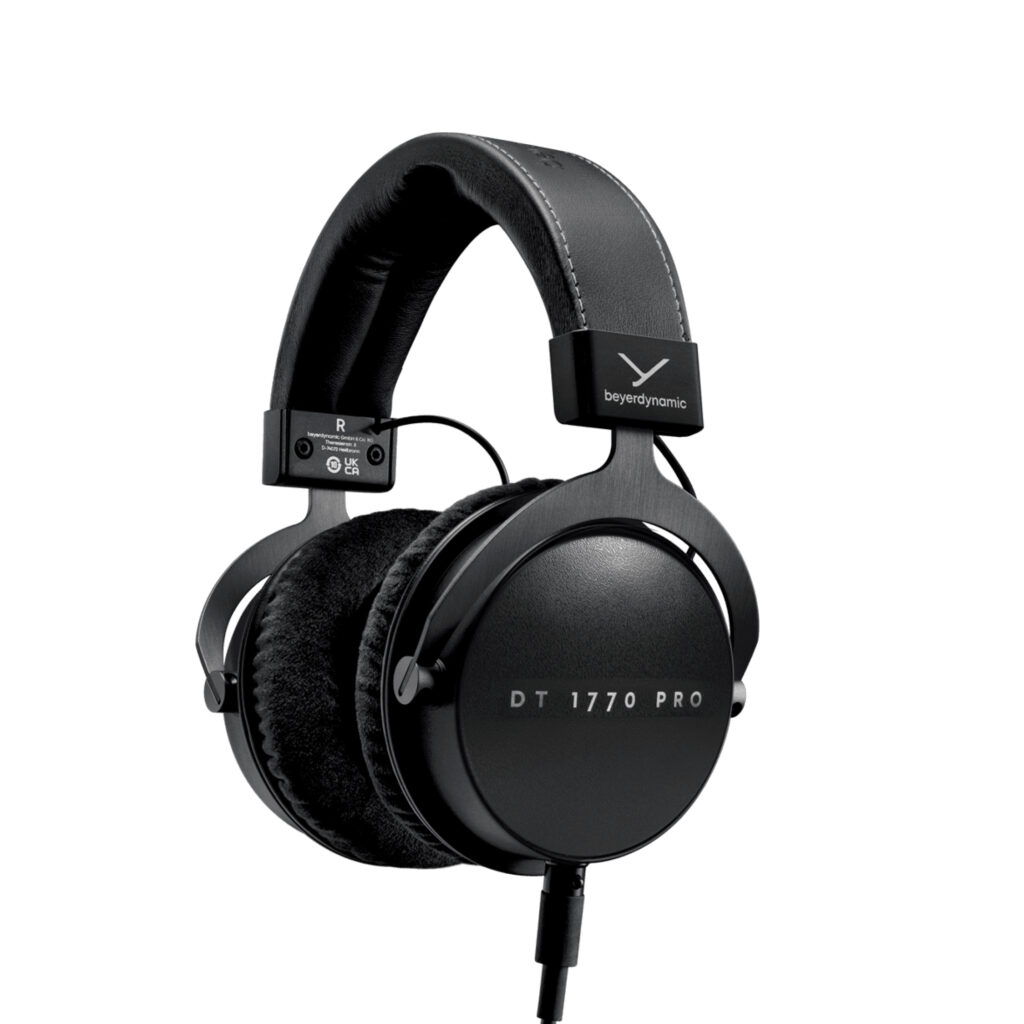
Beyerdynamic DT 1770 PRO MKII is a closed studio headphone for buyers who value maintainable hardware and a generous working package. The revised model changes the electrical demands of the original and supplies two kinds of pads rather than one fixed configuration. Those are useful changes, but they do not make the sound universally suitable. Its strongest case is a defined recording or monitoring job where isolation, reliable connections and familiar fit matter every day.
Research-based review. This assessment draws on manufacturer documentation and the original independent evaluations linked below. Audio Review has not performed a hands-on test of this model.
A closed tool for a particular job
A musician recording beside a microphone has different needs from an editor working alone after the session. In the first situation, sound escaping from a headphone can reach the recording. In the second, the priority may be judging balance in a quiet room. The DT 1770 PRO MKII addresses the closed-headphone side of that divide, although no enclosure makes headphone leakage impossible at every level.
Our recommendation is to decide which task is causing difficulty before upgrading. If a current pair already gives you dependable results, a new premium headphone should offer a concrete improvement in comfort, serviceability or working conditions. Simply changing to a more expensive monitoring system introduces a period of relearning. That cost matters even when the new hardware is objectively more convenient.
Construction and the supplied package
The official data sheet specifies 377 g without the cable, a 30-ohm load and a single locking mini-XLR connection. A three-metre straight lead, a coiled lead extending to five metres and a hard case are included. Pads and headband cushioning are replaceable. The 45 mm TESLA.45 driver distinguishes this generation from the original model.
For a working desk, the choice of cable is more than a presentation detail. A coiled lead can keep excess length together, but its pull may become noticeable when the source is distant. A straight cable is easier to route behind a desk, provided it cannot pass under a chair. Choose the arrangement that lets you turn toward an instrument without placing tension on the socket. A locking connector protects against accidental disconnection, so routing still needs attention.
Pads, fit and isolation
Velour and leatherette pads are supplied. Beyerdynamic describes different acoustic and isolation roles for the two sets, and SoundGuys’ independent assessment confirms useful passive attenuation with both configurations. The enclosure has no active noise-cancelling system. This is physical isolation that depends on the seal and the frequencies of the surrounding noise.
Keep a record of the pads used when making important tonal decisions. Swapping between sets may be useful during an audition, but an established production should not acquire an unexplained monitoring change halfway through. Glasses, pad wear and headband adjustment can also influence the seal. If the low end changes when you move your jaw or touch a cup, settle the fit before deciding that the recording itself needs correction.
Sound quality and the premium question
SoundGuys’ original test gives a qualified assessment of the tonal balance, with a substantial bass character and reservations about the value of the sound at the asking price. This is a useful counterweight to the manufacturer’s reference-monitoring description. The same review is more positive about isolation, comfort and the replaceable cable arrangement.
Our view is that the MKII makes more sense for a buyer who likes its particular presentation than for someone buying a studio label as a shortcut to neutrality. A prominent low end can be enjoyable during performance without being the balance you want for every editing decision. When auditioning, compare familiar spoken voice, a dense arrangement and a sparse acoustic recording. The question is whether you can make consistent judgments, rather than whether one dramatic bass passage sounds exciting.
Monitoring without being misled by level
When comparing two headphones, a small loudness difference can favour the louder pair immediately. Match the apparent level carefully and avoid judging only a few seconds of a spectacular track. Include material where you know how the vocal should sit relative to the rhythm section. Then check whether your preference remains after the initial impact has passed.
For production, a useful trial is to make a modest balance adjustment and hear its result on another trusted system. That does not need to become a formal laboratory exercise. It is simply a way to learn whether the new presentation encourages changes that help the finished work. A headphone that exposes details dramatically can still lead you toward excessive corrections if those details are emphasised by the monitoring system itself.
Source requirements and sensible accessories
The lower nominal impedance broadens source options compared with the older high-impedance generation. SoundGuys also finds the power requirement manageable. Start with a clean output that provides a comfortable adjustment range; an audio interface is often convenient for a recording workstation because it places monitoring and microphone connections together.
Do not mistake the included jack adapter for a change in amplifier topology. It changes the plug size, while the headphone remains the same stereo load. A separate microphone is needed for communication because this is not an integrated headset. If you apply EQ, allow digital headroom and save the active setting clearly. Spend money on another amplifier when an actual output limitation appears, rather than using the headphone’s price to infer that one must exist.
Who should keep an existing pair?
An owner of a dependable DT 770 Pro should compare the real inconvenience being solved. If a fixed cable is repeatedly damaged or the present fit is uncomfortable, the newer package may have a practical advantage. If the existing pair is reliable and familiar, replacement pads or a better workstation arrangement may produce a more useful improvement for less expenditure.
The DT 1770 PRO MKII is also a substantial headphone to carry. Its case is useful protection, but does not make it an unobtrusive mobile accessory. For travel, calls and noisy commuting, an ANC wireless model serves a different set of priorities. For studio ownership, enquire about local replacement parts and support. Long service life is a stronger reason to consider this format than treating any headphone as a permanent cure for every monitoring problem.
Alternatives to consider
Beyerdynamic DT 770 Pro: The established DT 770 Pro is an important cost comparison. Choose the appropriate impedance version for your output and consider whether you need the MKII detachable lead and accessory package, rather than assuming a more expensive model must improve every monitoring task.
Audio-Technica ATH-M50x: The ATH-M50x offers another familiar closed studio format with detachable cables. Compare fit, seal and vocal balance directly; the practical winner may be the headphone that remains comfortable and predictable through an entire recording session.
Beyerdynamic DT 1770 PRO MKII key specifications
- Design
- Closed-back, circumaural
- Driver
- 45 mm TESLA.45 dynamic
- Nominal impedance
- 30 ohms
- Weight without cable
- 377 g
- Supplied pads
- Velour and leatherette
- Supplied cables
- 3 m straight; 5 m coiled when stretched
- Headphone connector
- Locking 3-pin mini-XLR
- Source connector
- 3.5 mm with 6.35 mm adapter
- Case
- Hard case included
- Microphone
- None
View the official Beyerdynamic DT 1770 PRO MKII product page
Verdict
The DT 1770 PRO MKII earns consideration through its serviceable construction, practical cables and pad options. It is a coherent package for someone who needs a closed headphone frequently and already understands the tonal presentation they prefer. Those hardware strengths deserve recognition even though the sound is not an automatic recommendation to every buyer seeking a neutral reference.
Audition it beside a familiar lower-cost closed model before committing. Pay attention to bass decisions, seal stability and neck comfort over time. If those checks favour the MKII, the premium can buy useful daily improvements. If they do not, keep the reliable pair you already know and spend the difference on a problem the rest of the system actually has.
Primary documentation and independent reviews
Beyerdynamic official DT 1770 PRO MKII product page · Beyerdynamic official technical data sheet · SoundGuys original DT 1770 PRO MKII evaluation
Editorial record
Sources and updates
Product specifications and factual claims were checked against Official Beyerdynamic DT 1770 PRO MKII product page ↗. Scores and buying advice follow our category-specific editorial methodology.
- Published
- November 17, 2026
- Last updated
- November 17, 2026